
Alopecia Areata Treatment in Rewari
Expert Care at SQIN Clinic
Alopecia Areata Treatment
Finding a smooth, coin-sized bald patch on your scalp — with no injury, no gradual thinning, seemingly overnight — is unsettling in a way ordinary hair fall isn’t. If this sounds familiar, you’re likely dealing with alopecia areata, an autoimmune condition where the body’s own immune system temporarily attacks hair follicles. The good news: it’s one of the more treatable forms of hair loss when caught and managed early.
At SQIN Skin Care Clinic, Dr. Smita Kashyap, the Best Dermatologist in Rewari, offers a structured, evidence-based Alopecia Areata Treatment programme — confirming the diagnosis first, then calming the immune response that’s attacking your follicles, with a plan built around how extensive and active your condition is.
Book Your Alopecia Areata Consultation
Understanding Alopecia Areata: Causes, Symptoms & Risk Factors
Alopecia areata happens when the immune system mistakenly attacks hair follicles, pushing them into a resting phase without destroying them permanently. That’s an important distinction — unlike scarring hair loss, the follicles usually remain alive and capable of regrowing hair once the immune attack is brought under control.
What Triggers It
- An autoimmune response — the exact trigger varies, but genetics play a strong role
- Family history of alopecia areata or other autoimmune conditions
- Personal history of thyroid disease, vitiligo, or other autoimmune disorders
- Significant stress or illness, which can sometimes trigger or worsen an episode
Common Symptoms
- One or more smooth, round or oval bald patches, usually on the scalp
- Little to no redness, scaling, or pain at the patch itself
- Exclamation-mark hairs — short, tapered strands at the edge of a patch
- Pitting or ridging of the nails in some patients
- In more extensive cases, multiple patches merging, or hair loss across the entire scalp (alopecia totalis) or entire body (alopecia universalis)
Alopecia areata is not contagious, and it isn’t caused by anything you did — it’s an immune-system condition, not a hygiene or lifestyle failure. That said, an early, accurate diagnosis genuinely changes how well it responds to treatment.
Step-by-Step Alopecia Areata Treatment Process at SQIN
1. Clinical & Dermoscopic Examination
Dr. Kashyap examines the patches, hair, and nails, and uses dermoscopy to look for the specific signs (exclamation-mark hairs, black dots, yellow dots) that confirm alopecia areata and help gauge how active it is.
2. Ruling Out Related Conditions
Because alopecia areata is linked to other autoimmune conditions, basic checks (such as thyroid function) may be recommended, especially with recurrent or extensive patches.
3. Personalised Treatment Plan
Treatment is matched to the extent and activity of the condition — a single small patch is treated very differently from multiple or rapidly-spreading patches.
4. In-Clinic Treatment
Depending on your case, this may include intralesional corticosteroid injections (the most common first-line option for patchy alopecia areata), topical treatments, or referral for more extensive disease requiring oral therapy.
5. Monitoring Regrowth & Activity
Follow-up visits track new growth, check for new patches, and confirm the immune activity is settling — adjusting the plan if the condition isn’t responding as expected.
6. Relapse-Prevention Guidance
Because alopecia areata can recur, you’re given practical guidance on what to watch for and when to come back in, rather than being discharged with no follow-up plan.
Treatment Options & Technology We Use
- Dermoscopic evaluation for accurate diagnosis and activity assessment
- Intralesional corticosteroid injections — the standard first-line treatment for localized patches, delivered with fine needles directly into the affected area
- Topical corticosteroids and other topical immunotherapy for select cases
- Referral pathway for oral or advanced systemic options in extensive or rapidly progressing disease, where appropriate
- Structured follow-up scheduling to track regrowth and catch recurrence early
Real Results: What Progress Looks Like
Regrowth in alopecia areata often starts as fine, initially colourless (vellus) hair within the patch, thickening and regaining colour over the following weeks to months. We recommend documenting real, consent-approved patient photos of a patch at diagnosis and at follow-up intervals for a genuine before/after gallery — and being upfront that regrowth timing varies considerably between patients, since alopecia areata is well known for its unpredictable, sometimes relapsing course.
Placeholder — insert a real before/after gallery module here once patient-consented photos are available. Do not publish this section with stock or stand-in images.
Key Benefits & Long-Term Outcomes
- Follicles are typically still alive, so regrowth is genuinely possible with the right treatment
- Early treatment of localized patches has a good response rate in many patients
- A managed, monitored approach that catches new patches or flare-ups earlier
- Access to a full range of options — from simple injections to referral for advanced therapy — under one dermatologist
Who Should Consider This Treatment?
- Anyone with a sudden, smooth, round or oval bald patch with no obvious cause like injury or infection
- Patients with a personal or family history of autoimmune conditions noticing patchy hair loss
- Anyone with more than one patch, or patches that seem to be growing or multiplying
- Patients who’ve noticed nail pitting or ridging alongside hair loss
- Anyone previously diagnosed with alopecia areata experiencing a possible relapse
Safety, Effectiveness & Recovery
Intralesional steroid injections, the most common in-clinic treatment for localized alopecia areata, are a quick, well-tolerated outpatient procedure using fine needles — most patients describe brief discomfort during the injection and no meaningful downtime afterward. Treatment is tailored to disease extent, and Dr. Kashyap will discuss the specific risks and expected response rate for your individual case, since these vary between localized and more extensive presentations.
Expected Timeline & Why Follow-Up Matters
- Initial regrowth (fine, often colourless hair) is often visible within 6–8 weeks of starting injection treatment
- Full regrowth and colour return in a treated patch typically takes several months
- Injections are usually repeated every 4–6 weeks until the patch responds
- Alopecia areata has a naturally relapsing-remitting course in some patients, which is why scheduled follow-up — even after regrowth — matters for catching recurrence early
Because activity can flare up again after a period of remission, ongoing monitoring (not just treating the current patch and stopping) is what actually protects long-term results.
Why Choose SQIN Skin Care Clinic for Alopecia Areata Treatment in Rewari?
- Led by Dr. Smita Kashyap, MD Dermatology, with 18+ years of clinical experience treating autoimmune and inflammatory hair conditions
- Accurate diagnosis through dermoscopy, not guesswork based on appearance alone
- A full spectrum of treatment options matched to how extensive and active your condition is
- Structured follow-up to track regrowth and flag recurrence early
- Sterile, hygienic clinical setting with transparent, upfront pricing
- Trusted across Rewari, Dharuhera, Bawal, and Kosli — rated Excellent based on 493+ Google reviews
Common Myths About Alopecia Areata — Busted
Myth: Alopecia areata means permanent, irreversible baldness.
Fact: In most localized cases, hair follicles remain alive and capable of regrowth — many patients see significant regrowth with appropriate treatment, though results and timelines vary.
Myth: It’s contagious or caused by poor hygiene.
Fact: Alopecia areata is an autoimmune condition, not an infection or a hygiene issue, and cannot spread to others.
Myth: Once it happens once, it will keep spreading until you go completely bald.
Fact: Many patients experience one or a few isolated patches that respond to treatment and don’t progress further — extensive presentations like alopecia totalis or universalis are less common outcomes, not the default course.
Myth: There’s nothing a dermatologist can do beyond waiting it out.
Fact: While some mild cases do resolve on their own, active treatment — particularly early on for localized patches — improves and speeds up the chances of regrowth in many patients.
Pre-Treatment Preparation & Post-Treatment Care
Before Your Consultation
- Note when the patch first appeared and whether it has changed in size
- Mention any personal or family history of thyroid disease, vitiligo, or other autoimmune conditions
- List any recent major stress, illness, or medication changes
After Starting Treatment
- Attend injection sessions on the recommended schedule — spacing them out inconsistently slows response
- Watch for and report any new patches promptly rather than waiting for the next scheduled visit
- Avoid unnecessary trauma or harsh chemical treatment to the affected area while it’s healing
- Keep scheduled follow-ups even after regrowth, since monitoring for recurrence is part of long-term management
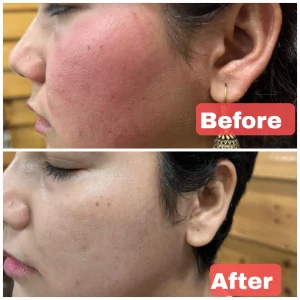
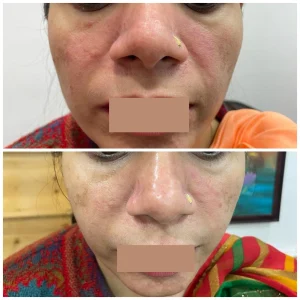
Aapke Skin Ka Real Hero – SQIN Rewari!
"Alopecia Areata Treatment – Bald Patches की Tension छोड़ो… Hair Regrowth की तरफ बढ़ो! Get Advanced Alopecia Areata Treatment at SQIN Clinic with expert care by Dr. Smita Kashyap."
FAQs – Alopecia Areata Treatment in Rewari
Will my hair definitely grow back?
In many localized cases, yes — follicles usually remain alive, and treatment can support regrowth. Response varies by patient and by how extensive the condition is, which is why an individual evaluation matters.
Is alopecia areata the same as male or female pattern baldness?
No. Pattern baldness is genetic and progressive, while alopecia areata is an autoimmune condition causing sudden, patchy hair loss with follicles that typically remain alive and capable of regrowth.
Do the steroid injections hurt?
They cause brief discomfort during the injection, similar to a routine vaccination, and there’s no significant downtime — most patients return to normal activities immediately.
Can alopecia areata come back after successful treatment?
Yes, it can have a relapsing-remitting course in some patients, which is why ongoing follow-up is recommended even after a patch has fully regrown.
Is alopecia areata linked to other health conditions?
It’s associated with other autoimmune conditions such as thyroid disease and vitiligo in some patients, which is why a broader health history is taken as part of the evaluation.
How soon should I see a dermatologist after noticing a bald patch?
As early as possible. Earlier treatment of active, localized patches generally has a better response rate than starting once patches have merged or spread.
What Are You Waiting For...
Book Your Appointment with Rewari’s Leading Dermatologist – Dr. Smita Kashyap
Don’t let Alopecia Areata and sudden hair loss affect your confidence and quality of life. Contact SQIN Clinic for expert Alopecia Areata Treatment in Rewari and a personalized approach to help manage hair loss and support healthy hair regrowth.
Dr. Smita Kashyap, MD Dermatology, with 18+ Years of Experience
Our location
Near Vodafone Care, Shiv Chowk, Rewari, Haryana 123401, India
Opening Hours
Mon-Sat: 09:00am-07:30pm
Sun: 09am-03:00pm
Contact
Phone: +91-951-822-2407
Email: [email protected]
EXCELLENT Based on 493 reviews
 Posted on Google
 Sushma Sinha
Trustindex verifies that the original source of the review is Google.
bestPosted on Google omveer dhillonVery good service with nice staff and facility .Doctor is very good and with helpful staff. Maintenance is good.Posted on Google
 Tanu YadavBest clinic so far very satisfied. Doctor is very good. Listen all problem carefully. Love the homecare regime and I recently took hydrafacial. It was very good.Posted on Google
 rao sahabVery nice experiencePosted on Google
 Karan SinghHair transplant ✌️👍👍Posted on Google
 Vidhi YadavOne of The Best Dermatologist in Rewari.I will suggest you Dr. Smita Kashyap in whole Rewari. Very good behaviour of all staff and specially impressed from politely talk of Doctor.I had taken the skin whitening treatment from dr smita kashyap.I got my desired result and I am very happy☺️Posted on Google
 Neha RaoThis is a very good clinic, everyone treats them very well.It's been a month since I started treatment, and I'm seeing a good improvement in my acne and acne marks.Posted on Google
 Dr.Amit RajputMedicine care diseases But only doctors & staff can Care patients Carl Jany Acne treatment Melasma treatment Hair fall Hair prp Fungal infection Excema Skin tightening Laser facial Laser hair reduction Treatment,, A good doctor Smita Kashyap SQIN laser & cosmetic surgery & hair Transplant Clinic best Dermatologist & skin specialist In Rewari haryanaPosted on Google
 Gaurav KaushikI got hair laser treatment done by Dr. Samita Kashyap. I got result on 3 session She is perfect Dr Rewari area for hair laser treatment and also other skin diseases.Verified by TrustindexTrustindex verified badge is the Universal Symbol of Trust. Only the greatest companies can get the verified badge who has a review score above 4.5, based on customer reviews over the past 12 months. Read more